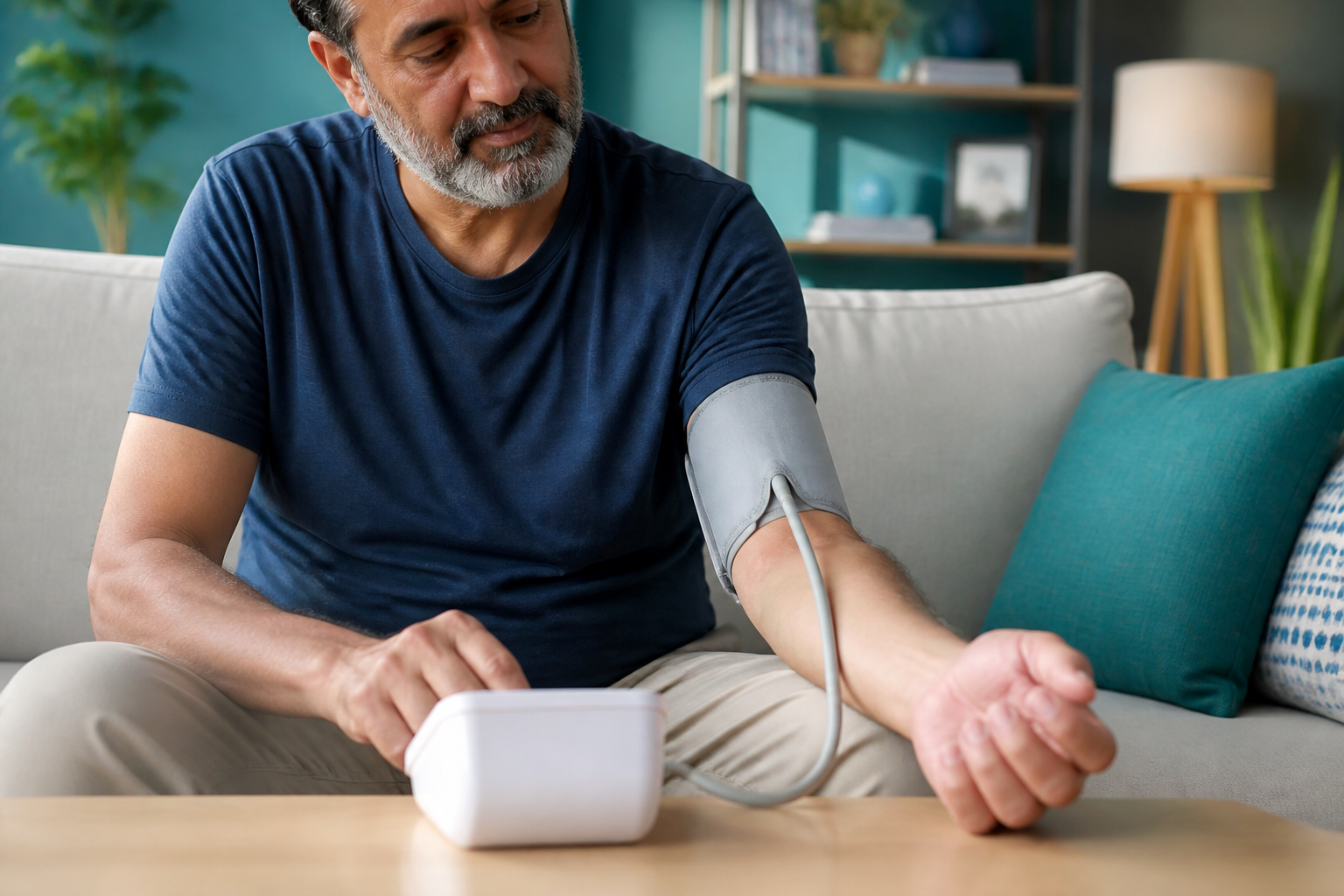
Understanding Blood Pressure Readings at Home
How to measure BP correctly, what the numbers mean, and when home readings should prompt a clinic visit.
Home blood pressure monitors have become common in Indian households, and for good reason — hypertension is one of the most widespread chronic conditions in the country, often silently present for years without obvious symptoms. Checking blood pressure at home is convenient, avoids the "white coat effect" of anxiety-raised readings at a clinic, and helps both you and your doctor track patterns over time rather than relying on a single reading taken during an occasional visit.
However, a home BP monitor is only as useful as the technique behind it. Incorrect cuff placement, wrong timing, or misunderstanding what the numbers mean can lead to inaccurate readings and unnecessary worry — or false reassurance. This guide covers how to measure blood pressure correctly at home, what the numbers actually represent, and when a reading should prompt a call to your doctor.
What Blood Pressure Numbers Actually Mean
A blood pressure reading has two numbers, written as one over the other, such as 120/80 mmHg.
- Systolic pressure (the top number): The pressure in your arteries when your heart beats and pushes blood out.
- Diastolic pressure (the bottom number): The pressure in your arteries when your heart rests between beats.
Both numbers matter, though systolic pressure tends to receive more attention in general health discussions, especially as people age, since it often rises more with age-related changes in blood vessels.
General Blood Pressure Categories
Health organisations commonly use categories like these as general reference points (your doctor may interpret your specific numbers differently based on your overall health history):
- Normal: Below approximately 120/80 mmHg
- Elevated: Systolic in the 120-129 range with diastolic below 80
- Stage 1 hypertension: Roughly 130-139 systolic or 80-89 diastolic
- Stage 2 hypertension: 140/90 mmHg or higher
- Hypertensive crisis: Above 180/120 mmHg — this requires prompt medical attention, especially if accompanied by symptoms like chest pain, breathlessness, severe headache, or vision changes
These ranges are general guidance, not a substitute for your doctor's assessment, which also considers your age, other health conditions, and how consistently elevated readings have been over time.
Choosing the Right Home BP Monitor
Not all home monitors are equally accurate. A few practical pointers:
- Choose an upper-arm cuff monitor rather than a wrist or finger device, as upper-arm readings are generally more reliable for most people.
- Check the cuff size. A cuff that is too small for your arm circumference can give falsely high readings, while a cuff that is too large can give falsely low readings. Many monitors come with a standard cuff, but larger or smaller cuffs are usually available separately if needed.
- Prefer a validated, reputable brand available through a pharmacy rather than an unbranded device, and check that it has a clear digital display and stores previous readings if possible.
- Get your monitor checked periodically — some clinics and pharmacies can compare your home device reading against a clinical one to confirm it remains accurate over time.
How to Measure Blood Pressure Correctly at Home
Technique matters more than most people realise — small mistakes can shift a reading by ten points or more, potentially changing how a result is interpreted.
- Rest for five minutes in a quiet setting before measuring, seated with your back supported and feet flat on the floor, not crossed.
- Avoid caffeine, smoking, or exercise for at least 30 minutes before measuring, as all of these can temporarily raise blood pressure.
- Empty your bladder first — a full bladder can modestly raise readings.
- Support your arm at heart level, resting on a table or armrest, rather than holding it up unsupported or letting it hang down.
- Place the cuff on bare skin, not over clothing, positioned about an inch above the elbow crease as per your monitor's instructions.
- Stay still and silent during measurement — talking, moving, or checking your phone during the reading can affect accuracy.
- Take two or three readings, one to two minutes apart, and record the average rather than relying on a single number, especially if the first reading seems unusually high.
- Measure at consistent times, such as morning (before medicines and breakfast) and evening, to track meaningful patterns rather than isolated snapshots.
Common Mistakes That Skew Readings
- Measuring immediately after climbing stairs, an argument, or a stressful phone call
- Wrapping the cuff over a shirt sleeve instead of bare skin
- Talking or checking a phone during measurement
- Using a cuff size that doesn't match arm circumference
- Measuring while the bladder is full
- Taking only one reading and treating it as definitive, especially if it seems unusually high or low compared to your normal pattern
- Crossing legs or letting the arm hang unsupported below heart level
Keeping a Useful BP Log
A simple log — whether on paper or in a phone app — makes home monitoring genuinely useful for your doctor, rather than just a source of daily anxiety. Record the date, time, both numbers, heart rate if your device shows it, and any relevant notes (such as "after a stressful morning" or "before BP medicine"). Bring this log to your appointments rather than relying on your doctor asking for isolated numbers from memory. Patterns over days and weeks are far more clinically useful than any single reading.
Understanding Normal Variation
Blood pressure naturally fluctuates throughout the day due to activity, stress, temperature, meals, and even the time of day — it is typically slightly lower during sleep and can rise in the early morning hours. A single higher-than-usual reading, especially if you were stressed, just had caffeine, or measured incorrectly, is not automatically a cause for alarm. What matters more clinically is a consistent pattern of elevated readings across multiple days and times, which is exactly why home monitoring, done correctly and regularly, is more informative than a single clinic visit reading.
When Home Readings Should Prompt a Doctor Visit
While occasional variation is normal, certain patterns and specific readings warrant medical attention:
- Consistently elevated readings above 140/90 mmHg across several separate measurements over a week or two, especially if you are not already on treatment for hypertension
- A single reading above 180/120 mmHg — seek prompt medical attention, particularly if accompanied by chest pain, severe headache, breathlessness, vision disturbances, or confusion, as this can indicate a hypertensive emergency
- Readings that are unusually low (such as below 90/60 mmHg) accompanied by dizziness, fainting, or unusual fatigue
- A noticeable, sustained change from your normal baseline readings, even if still within a broadly "acceptable" range for the general population
- New symptoms alongside blood pressure changes — swelling in the legs, unexplained breathlessness, or persistent headaches
- If you are already on blood pressure medicine and your readings remain consistently high despite adherence, this may indicate a need for dose adjustment, which should be discussed with your doctor rather than self-adjusted
Lifestyle Habits That Support Healthy Blood Pressure
- Reduce salt intake, being mindful of pickles, papads, namkeens, and packaged foods common in Indian diets, which often carry high sodium content
- Stay physically active with regular walking or other moderate exercise, as advised by your doctor based on your overall health
- Maintain a healthy body weight, since excess weight is a well-established contributor to elevated blood pressure
- Limit alcohol and avoid tobacco, both of which are linked to higher blood pressure and cardiovascular risk
- Manage stress through adequate sleep, relaxation practices, or activities that work for you personally
- Take prescribed medicines consistently at the same time each day, rather than skipping doses on days when you "feel fine," since blood pressure control is about long-term consistency, not day-to-day symptoms
Frequently Asked Questions
Why is my blood pressure higher at the clinic than at home?
This is a well-recognised phenomenon called "white coat hypertension," where anxiety about a medical setting temporarily raises blood pressure. It's one of the key reasons home monitoring is valuable — it reflects your everyday baseline more accurately.
Can I rely only on home readings and skip doctor visits?
No. Home monitoring is a valuable complement to, not a replacement for, regular medical checkups, especially since your doctor also assesses other factors like kidney function, cholesterol, and overall cardiovascular risk that a BP monitor alone cannot capture.
Why do my left and right arm readings differ slightly?
A small difference between arms (generally up to about 10 mmHg) is common and not usually concerning. If the difference is consistently larger, mention it to your doctor. It's generally recommended to measure the same arm consistently for tracking purposes, unless your doctor advises otherwise.
Should I stop my blood pressure medicine if home readings look normal?
No — normal readings while on treatment usually mean the medicine is working, not that it's no longer needed. Never stop or adjust blood pressure medicine without consulting your doctor, as this can cause a rebound rise in blood pressure.
Does heart rate on the monitor tell me anything about my blood pressure?
Heart rate and blood pressure are related but distinct measurements. Some monitors display both, and while a very high or low heart rate alongside abnormal blood pressure readings is worth mentioning to your doctor, heart rate alone doesn't replace proper blood pressure interpretation.
A Quick Home Monitoring Checklist
- Rest quietly for five minutes before measuring, avoiding caffeine and exercise beforehand
- Sit with back supported, feet flat, and arm at heart level on bare skin
- Take two to three readings a minute apart and record the average
- Measure at consistent times, ideally morning and evening
- Keep a log to share with your doctor rather than relying on memory
- Seek prompt care for readings above 180/120 mmHg or symptoms like chest pain or severe headache
This article is for general health information only and does not replace professional medical advice, diagnosis, or treatment. Blood pressure interpretation depends on individual health history and should be discussed with your doctor, especially before starting, stopping, or adjusting any blood pressure medicine.
Comments
Start the conversation
No comments yet. If you have a practical note for other readers, add it below.