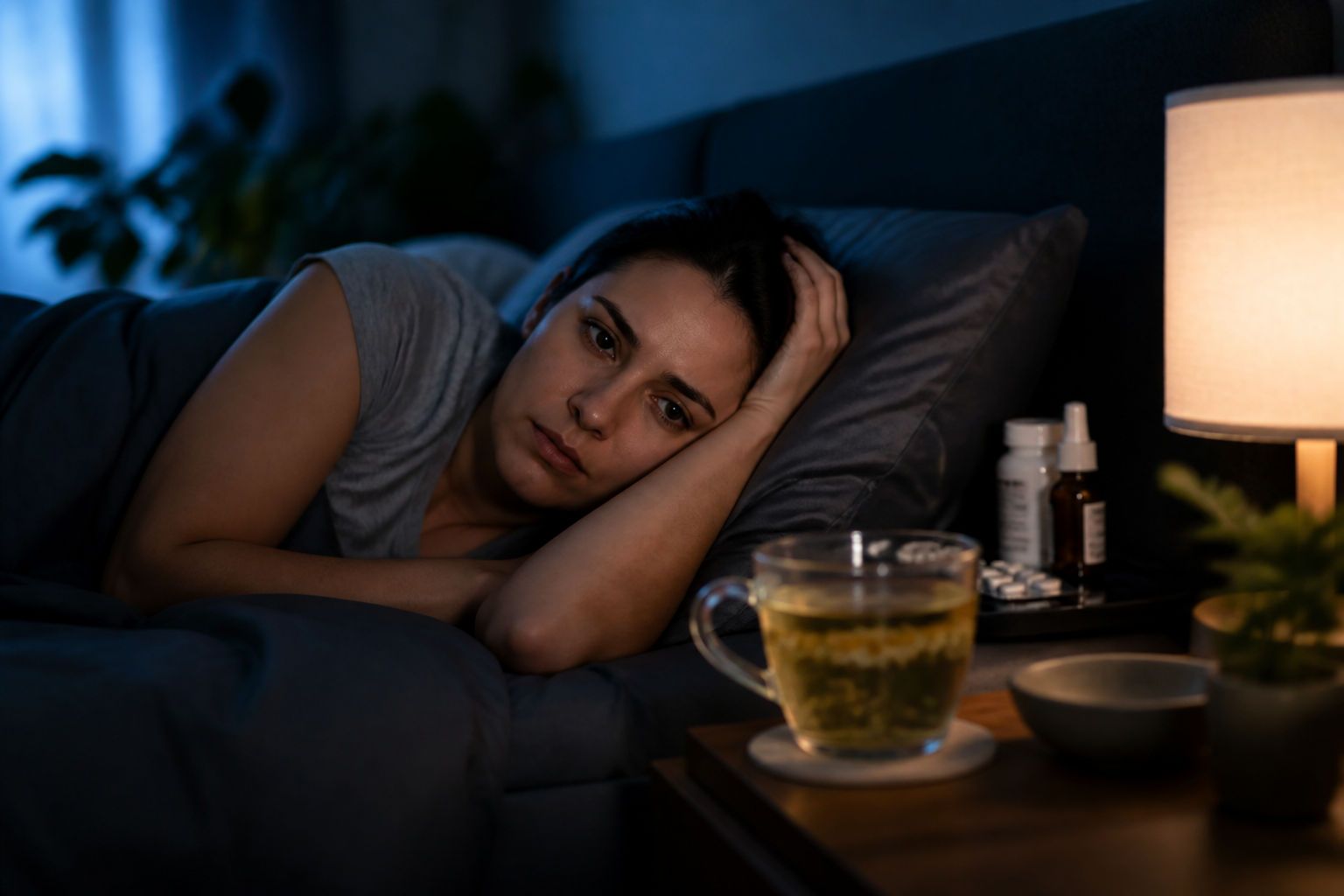
Sleep, Stress, and OTC Limits: What Pharmacy Shelves Can and Cannot Fix
Melatonin, herbal sleep aids, anxiety red flags, and when self-medication should stop.
Poor sleep and rising stress have become common complaints at pharmacy counters across India, especially in cities where long work hours, screen time, and packed schedules leave little room for genuine rest. It is tempting to reach for something off the shelf — a herbal sleep tablet, an antihistamine known to cause drowsiness, or a melatonin supplement bought online — hoping for a quick fix. Some of these options genuinely help in the short term. But it is just as important to understand what pharmacy shelves cannot fix, and when ongoing sleep trouble or stress is a sign that self-medication should stop and a doctor should be involved.
This guide walks through what OTC sleep and stress products in India actually contain, what they can realistically help with, the risks of relying on them long-term, and the sleep and stress habits that tend to work better — and more sustainably — than any pill from the shelf.
Why Sleep and Stress Are Closely Linked
Sleep and stress feed into each other in a cycle that is easy to fall into and harder to climb out of. Stress raises cortisol and keeps the mind alert precisely when it should be winding down, making it harder to fall asleep. Poor sleep, in turn, reduces the brain's capacity to regulate emotional response the next day, making minor stressors feel larger and harder to manage. Over weeks, this cycle can quietly worsen, with people sleeping less, feeling more anxious, and then sleeping even less as a result — which is exactly why treating only the symptom (reaching for a sleep aid every night) rarely fixes the underlying pattern.
What OTC Sleep Aids Actually Contain in India
Understanding what you are actually taking is the first step toward using it sensibly.
Antihistamine-Based Sleep Aids
Many OTC "sleep-inducing" tablets available in India actually rely on older-generation antihistamines, originally developed for allergies, which cause drowsiness as a side effect. They can help with occasional, short-term sleeplessness, but tolerance builds relatively quickly, meaning the same dose becomes less effective within days to a couple of weeks. They can also cause a hungover, groggy feeling the next morning, dry mouth, and are best avoided in elderly people, where they carry a higher risk of confusion and falls.
Melatonin
Melatonin is a hormone your body naturally produces to regulate the sleep-wake cycle. Supplemental melatonin can help with specific situations like jet lag or shifting sleep schedules, and is generally considered to have a milder side-effect profile than antihistamines. However, it is not a strong sedative and often disappoints people expecting an immediate "knockout" effect for chronic insomnia. Its regulatory status and quality control as an OTC supplement in India also varies, so sourcing from reputable pharmacies matters.
Herbal and Ayurvedic Options
Products containing ashwagandha, valerian, or brahmi are commonly marketed for sleep and stress relief in India. Some people report mild benefit, and limited studies suggest modest effects for some of these ingredients, but robust, large-scale evidence is generally weaker than for prescription options. They are usually gentler and lower-risk than sedative medicines, but "herbal" does not automatically mean risk-free — some can interact with blood pressure medicines, blood thinners, or thyroid medication, so mentioning them to your doctor or pharmacist is still worthwhile.
What OTC Products Cannot Fix
It is important to be realistic about the limits of anything bought without a prescription:
- Underlying anxiety or depression: If poor sleep is driven by an anxiety disorder or depression, sleep aids may mask symptoms temporarily without addressing the root cause, and can sometimes delay someone from seeking the mental health support they actually need.
- Sleep apnoea: Loud snoring, gasping during sleep, and daytime exhaustion despite adequate hours in bed can point to obstructive sleep apnoea, a condition that sleep aids do not treat and can occasionally make more dangerous by further relaxing airway muscles.
- Chronic, long-standing insomnia: Insomnia lasting more than a few weeks often has behavioural and psychological components that respond better to structured approaches like cognitive behavioural therapy for insomnia (CBT-I) than to medication alone.
- Severe or escalating stress: Persistent stress affecting work, relationships, or daily functioning is a signal for professional support, not a self-medication project.
Dependency and Tolerance Risks
A common pattern seen at pharmacy counters is someone starting an OTC sleep aid "just for a few nights" during a stressful period, and continuing it for months because sleep feels difficult without it. Antihistamine-based sleep aids in particular can lead to tolerance, meaning higher doses are needed over time for the same effect, and a rebound period of worse sleep when stopped. This is not the same as full dependence seen with certain prescription sedatives, but it is a real pattern worth avoiding by keeping OTC use genuinely occasional — a handful of nights, not a nightly habit stretching into months.
Sleep Hygiene Steps That Work Better Than Pills
Behavioural changes are less exciting than a tablet, but they tend to produce more durable improvement for the majority of ordinary sleep trouble.
- Keep a consistent sleep and wake time, even on weekends, since irregular schedules confuse the body's internal clock more than most people realise.
- Reduce screen exposure in the hour before bed, since blue light from phones and laptops can suppress natural melatonin release.
- Avoid caffeine after early afternoon, including tea and coffee — caffeine's effects can linger for six hours or more in some people.
- Keep the bedroom cool, dark, and quiet, using blackout curtains or an eye mask if street light or early sunrise is an issue.
- Avoid heavy meals and alcohol close to bedtime, both of which can fragment sleep even if they initially feel relaxing.
- Get natural daylight exposure earlier in the day, which helps regulate the body's circadian rhythm and can improve night-time sleep quality.
- Reserve the bed for sleep, rather than working, scrolling, or watching shows in bed, so your mind associates the bed specifically with rest.
Stress Relief: What Is Safe to Self-Manage
- Regular physical activity, even a brisk 20 to 30 minute daily walk, meaningfully reduces baseline stress hormone levels over time.
- Simple breathing exercises or short meditation practices, which have reasonable evidence for reducing everyday stress and anxiety symptoms.
- Deliberately scheduling short breaks during a demanding workday, rather than pushing through without pause.
- Talking to friends, family, or peer support — social connection is one of the most consistently protective factors against chronic stress.
- Limiting continuous news or social media consumption if it noticeably worsens your mood or anxiety levels.
Red Flags That Need a Doctor, Not a Pharmacy Shelf
- Insomnia persisting most nights for more than three to four weeks despite good sleep habits
- Reliance on OTC sleep aids most nights for an extended period, or increasing the dose to get the same effect
- Loud snoring with breathing pauses noticed by a partner, or waking up gasping for air
- Persistent low mood, loss of interest in usual activities, or feelings of hopelessness alongside sleep trouble
- Panic attacks, a racing heart, or overwhelming anxiety that interferes with daily functioning
- Thoughts of self-harm or feeling unable to cope — this needs immediate professional support
- Sleep trouble that started alongside a new medicine, and may be a side effect worth discussing with your prescriber
These are signals that the issue has moved beyond what an OTC product is designed to handle, and a doctor, counsellor, or psychiatrist can offer more targeted, lasting help.
How Your Pharmacist Can Help
At MedsNMore, our pharmacists can help you choose an appropriate, lower-risk OTC option for genuinely occasional sleep trouble, explain realistic expectations for melatonin or herbal options, and flag potential interactions with your existing medicines. Just as importantly, they can help you recognise when a pattern of sleep or stress difficulty has moved beyond what a shelf product can address, and encourage a timely referral to your doctor rather than months of quiet self-medication.
Frequently Asked Questions
Is it safe to take an OTC sleep aid every night?
Regular nightly use of most OTC sleep aids, particularly antihistamine-based ones, is generally not recommended beyond a short period, due to tolerance and next-day grogginess. If you find yourself needing it nightly for more than a couple of weeks, it is time to speak with a doctor about the underlying cause.
Does melatonin work for everyone with insomnia?
No. Melatonin tends to help most with circadian rhythm issues like jet lag or shift-work sleep disruption, rather than general chronic insomnia. Its effect is usually mild rather than strongly sedating.
Can herbal sleep or stress supplements interact with my regular medicines?
Some can, particularly with blood pressure medicines, blood thinners, and thyroid medication. It is always worth mentioning any herbal or Ayurvedic supplement to your doctor or pharmacist, even if it seems harmless.
How do I know if my stress needs professional help rather than self-management?
If stress is affecting your ability to function at work, in relationships, or in daily tasks, persists for weeks without easing, or is accompanied by significant sleep disruption, low mood, or anxiety symptoms, it is a reasonable point to seek professional support rather than continuing to manage it alone.
Why do I feel groggy the morning after taking a sleep aid?
Many OTC sleep aids, especially antihistamine-based ones, have effects that linger well beyond the hours you are asleep, causing a "hungover" feeling the next morning. This is one reason they are best used only occasionally rather than as a nightly routine.
Can lack of sleep alone cause anxiety-like symptoms?
Yes. Sleep deprivation can genuinely produce symptoms that mimic or worsen anxiety, including irritability, difficulty concentrating, and a heightened stress response. Improving sleep is sometimes a meaningful part of managing what initially looks like a purely anxiety-related problem.
Disclaimer
This article is for general educational purposes only and does not replace professional medical advice, diagnosis, or treatment. Persistent sleep problems, anxiety, or stress that affect daily functioning should be evaluated by a doctor or mental health professional. If you are experiencing thoughts of self-harm, please seek immediate help from a mental health professional, doctor, or emergency service.
Comments
Start the conversation
No comments yet. If you have a practical note for other readers, add it below.