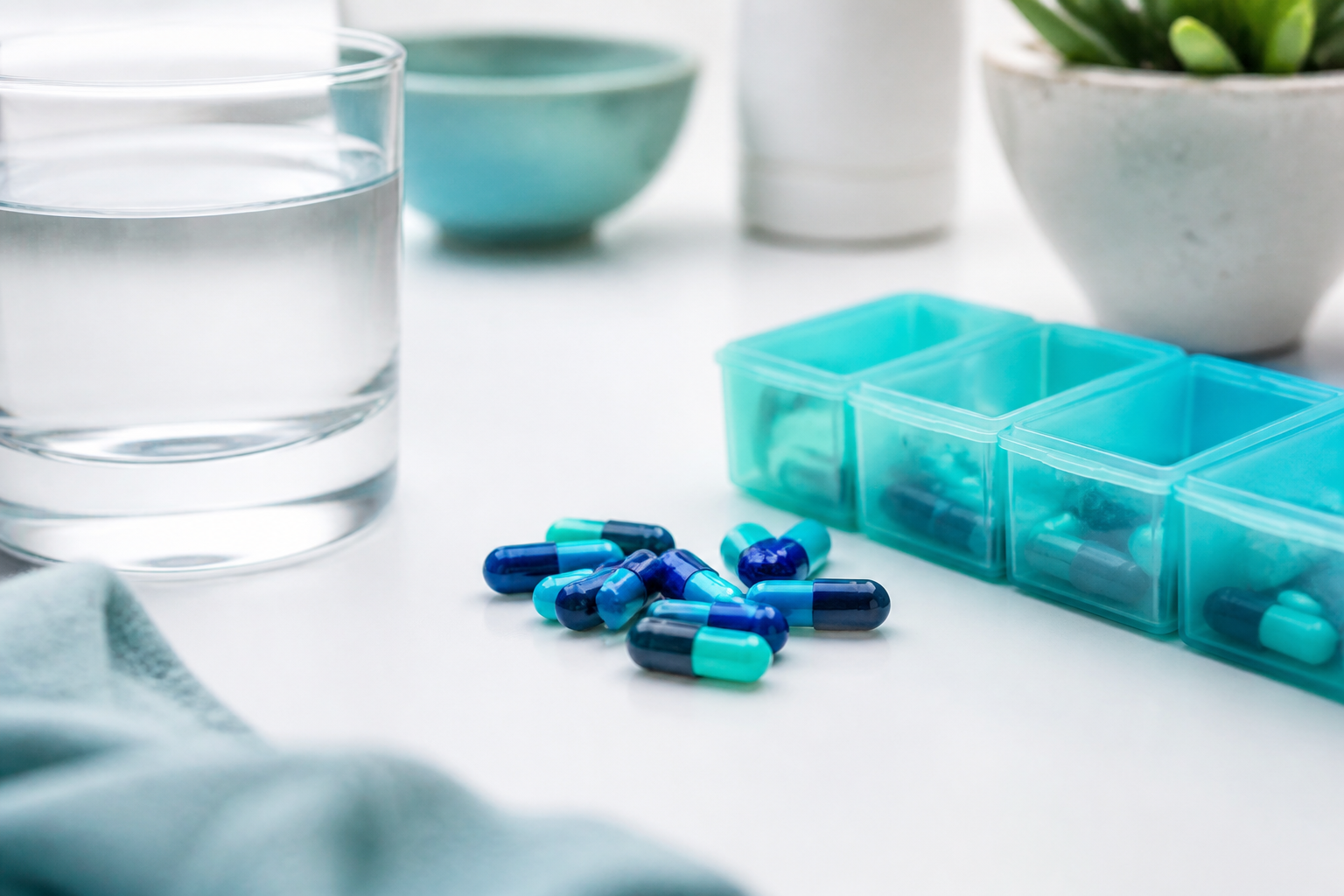
How to Take Antibiotics Correctly and Finish the Full Course
Timing, food interactions, missed doses, and why stopping early fuels antibiotic resistance.
Antibiotics are among the most powerful tools in modern medicine, capable of turning once life-threatening infections into manageable illnesses. But their power comes with responsibility. Taking antibiotics incorrectly — skipping doses, stopping early, or using leftover pills from a previous illness — does not just risk your own recovery. It also contributes to antibiotic resistance, a growing problem across India and the world where bacteria evolve to survive the very drugs meant to kill them.
This guide covers everything you need to know about taking antibiotics the right way: timing, food interactions, what to do about missed doses, and why finishing the full course matters more than most people realise.
What Are Antibiotics and How Do They Work?
Antibiotics are medicines designed to kill bacteria or stop them from multiplying. They are effective against bacterial infections such as urinary tract infections, certain throat infections, pneumonia, and skin infections. Importantly, antibiotics do not work against viral infections like the common cold, flu, or most cases of viral fever — taking them for these conditions provides no benefit and only increases the risk of side effects and resistance.
Your doctor prescribes a specific antibiotic, dose, and duration based on the type of infection, its severity, and your medical history. This prescription is carefully calculated, which is why altering it on your own — even with good intentions — can do more harm than good.
Timing: Why It Matters More Than You Think
Most antibiotics work best when a steady level of the drug is maintained in your bloodstream. This is why doctors prescribe them at specific intervals, such as every 8 hours, every 12 hours, or once daily.
- Follow the prescribed interval as closely as possible. If a medicine is prescribed thrice daily, try to space doses roughly 8 hours apart rather than clustering them all within a few daytime hours.
- Set reminders. Use phone alarms or a medicine reminder app, especially for courses that require doses in the middle of the day when you might be at work or outside.
- Complete the full duration. Even if you feel better after 2-3 days, the bacteria may not be fully eliminated. Stopping early is one of the most common reasons infections return, sometimes in a more resistant form.
Antibiotics and Food: Take With or Without Meals?
Whether an antibiotic should be taken before, with, or after food depends on the specific drug, and this instruction is not just a formality — it can significantly affect how well the medicine works or how it affects your stomach.
- Some antibiotics work best on an empty stomach because food can reduce their absorption into the bloodstream. Your doctor or pharmacist will specify if this applies to your prescription.
- Other antibiotics are better taken with food to reduce stomach irritation, nausea, or acidity — a common side effect with many antibiotic classes.
- Always read the label and pharmacy instructions carefully, and if unclear, ask your pharmacist directly rather than guessing.
- Avoid alcohol during antibiotic courses, as certain antibiotics can cause severe reactions (flushing, nausea, rapid heartbeat) when combined with alcohol, and alcohol can also worsen side effects like stomach upset and drowsiness.
- Be cautious with dairy products for certain antibiotic classes, as calcium can bind to the drug and reduce its absorption. Your pharmacist will flag this if it applies to your medicine.
What to Do If You Miss a Dose
Missed doses happen, but how you handle them matters.
- Take it as soon as you remember, unless it is almost time for your next scheduled dose.
- Never double up to "make up" for a missed dose — this increases the risk of side effects without improving effectiveness.
- Get back on schedule with your next dose at its regular time.
- If you miss multiple doses or are unsure how to proceed, call your doctor or pharmacist for guidance rather than guessing.
Why You Must Finish the Full Course
This is perhaps the single most important message about antibiotic use, and it deserves emphasis: always complete the full prescribed course, even if you feel completely better before it ends.
Here is why this matters so much:
- Feeling better does not mean the infection is gone. Symptoms often improve once the majority of bacteria are killed, but a smaller resistant population may still survive.
- Surviving bacteria can multiply again once the antibiotic is stopped, sometimes causing the infection to return — often harder to treat the second time.
- Incomplete courses drive antibiotic resistance. Bacteria that survive a partial course are, by definition, the ones that were hardest to kill. These survivors can multiply and pass on their resistance, contributing to a public health problem that makes future infections harder to treat for everyone, not just you.
- India has one of the highest rates of antibiotic resistance in the world, driven partly by incomplete courses, self-medication, and over-the-counter antibiotic use without prescriptions. Every person who finishes their course correctly is part of the solution.
Common Mistakes to Avoid
- Self-prescribing based on past experience: Just because an antibiotic worked for a similar-seeming illness before does not mean it is right for your current infection. Different infections need different antibiotics.
- Sharing antibiotics with family members: A course prescribed for one person's infection, weight, and medical history is not appropriate for someone else.
- Saving leftover antibiotics "for later": Partial courses stored for future use are both ineffective (wrong dose for a new infection) and risky (encourages resistance). Dispose of any leftover medicine responsibly rather than keeping it.
- Demanding antibiotics for viral illnesses: Colds, most sore throats, and flu are usually viral and do not respond to antibiotics. A good doctor will explain when antibiotics are not appropriate — trust that guidance.
- Stopping because of mild side effects without consulting your doctor first. Some side effects are manageable and expected; stopping abruptly can be worse than tolerating them briefly. Always check with your doctor before discontinuing.
Managing Common Side Effects
Some side effects are common with antibiotics and usually manageable:
- Stomach upset or diarrhoea: Taking with food (if appropriate for your medicine) can help. Probiotics, taken a couple of hours apart from the antibiotic dose, may also support gut health — ask your pharmacist for guidance.
- Nausea: Small, frequent meals and staying hydrated can help. If severe or persistent, inform your doctor.
- Mild rash or itching: Report this to your doctor promptly, as it could indicate a developing allergic reaction that needs evaluation.
Seek immediate medical attention if you experience difficulty breathing, swelling of the face or throat, severe rash, or persistent vomiting — these can indicate a serious allergic reaction requiring urgent care.
Storing Antibiotics Correctly
- Store tablets and capsules in a cool, dry place away from direct sunlight, as recommended for most oral medicines in Indian climates.
- Some antibiotic suspensions (liquid forms for children) require refrigeration after reconstitution and typically expire within 7-14 days — check the label and ask your pharmacist.
- Never use antibiotics past their expiry date, as effectiveness can decrease and safety cannot be guaranteed.
How Your Pharmacist Can Help
At MedsNMore, our pharmacists are available to support safe antibiotic use by:
- Clarifying food and timing instructions specific to your prescribed antibiotic
- Advising on how to manage missed doses
- Flagging potential interactions with other medicines you are taking
- Helping you understand and manage mild side effects
- Reminding you why completing the full course is essential, even once symptoms improve
Frequently Asked Questions
Can I stop antibiotics once I feel better?
No. Always complete the full course as prescribed by your doctor, even if symptoms disappear early. Stopping early can allow the infection to return and contributes to antibiotic resistance.
Is it okay to take leftover antibiotics from a previous prescription for a new illness?
No. Different infections require different antibiotics, doses, and durations. Using leftover medicine without medical advice can be ineffective or even harmful, and delays proper treatment.
Can I drink alcohol while on antibiotics?
It is best to avoid alcohol during any antibiotic course. Certain antibiotics can cause serious reactions with alcohol, and alcohol can also worsen common side effects like nausea and dizziness. Ask your pharmacist about your specific medicine.
What if my child refuses to take the full dose of antibiotic syrup?
Try mixing the dose immediately before giving it, use a proper oral syringe for accuracy, and consult your paediatrician if refusal is a persistent problem — do not simply skip doses without guidance.
Do antibiotics treat the common cold or flu?
No. Colds and flu are caused by viruses, and antibiotics only work against bacteria. Taking antibiotics for viral illnesses provides no benefit and increases the risk of side effects and resistance.
What should I do with unused antibiotics after completing my course?
If a small amount remains after completing your prescribed course (which should be rare if dosed correctly), do not keep it for future self-use. Ask your pharmacist about safe disposal options.
Disclaimer
This article is for general educational purposes only and does not replace professional medical advice, diagnosis, or treatment. Antibiotics must only be used under medical prescription and supervision. Always follow your doctor's specific instructions regarding dose, timing, and duration, and consult them before making any changes to your antibiotic course. MedsNMore pharmacists can clarify usage instructions but cannot prescribe or alter antibiotic therapy.
Comments
Start the conversation
No comments yet. If you have a practical note for other readers, add it below.