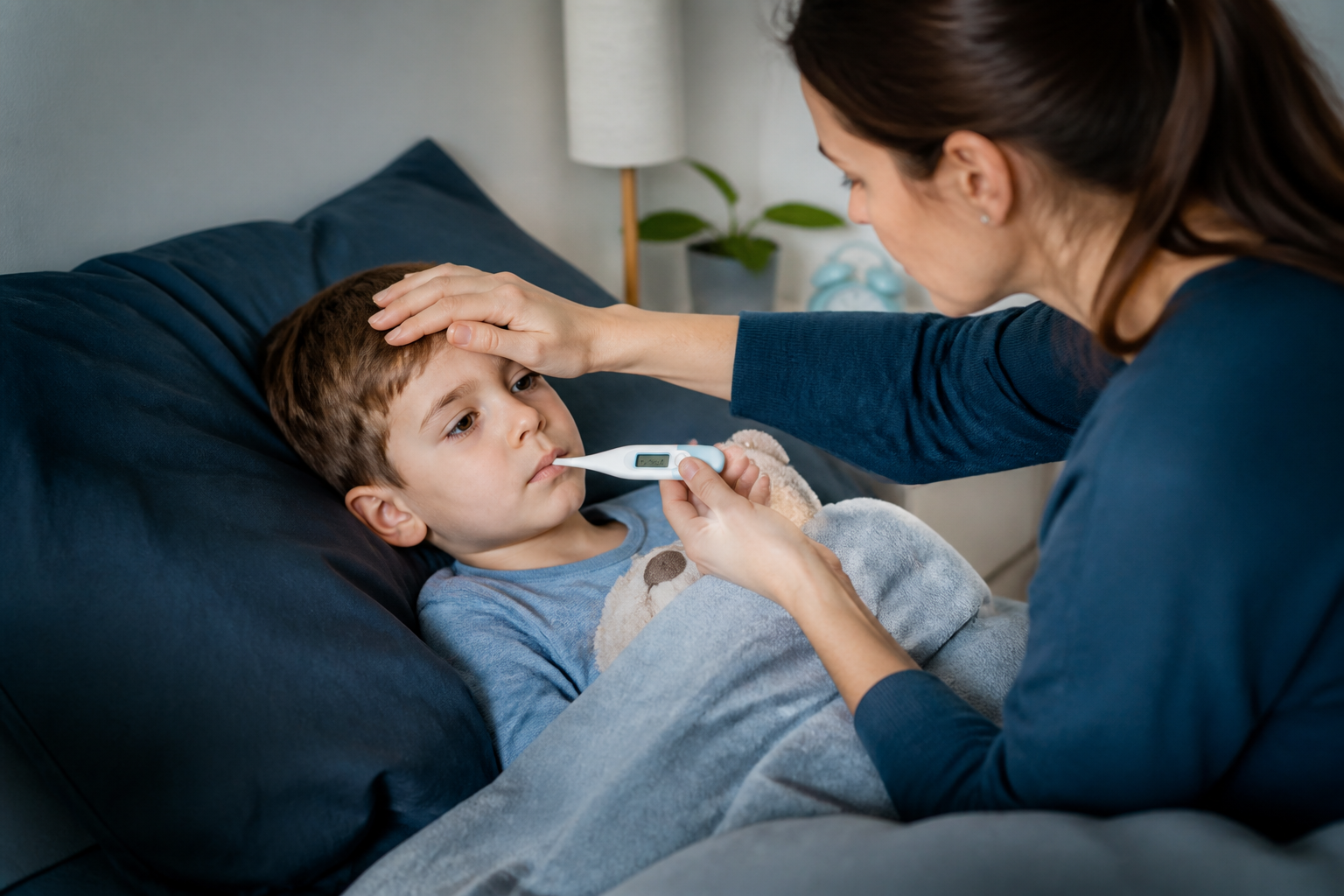
Child Fever: When to Wait, When to Worry, and Safe Medicine Use
Age-based fever guidance, correct paracetamol dosing by weight, and red flags for infants and toddlers.
Few things worry parents more than a child running a fever, especially in the middle of the night when clinics are closed and the internet offers a hundred conflicting opinions. Fever itself is not an illness — it is the body's natural response to fighting infection, most commonly a viral one that will resolve on its own. But knowing how to respond appropriately, dose medicines safely, and recognise genuine warning signs can make the difference between calm, effective home care and unnecessary panic or, worse, missing something serious.
This guide walks through age-based fever guidance, correct paracetamol dosing by weight, common myths, and clear red flags that mean it is time to see a paediatrician urgently.
What Counts as a Fever?
A normal body temperature is generally around 37°C (98.6°F), though it can vary slightly through the day. In children, a fever is typically defined as:
- Rectal or ear temperature: 38°C (100.4°F) or higher
- Oral temperature: 37.8°C (100°F) or higher
- Armpit (axillary) temperature: 37.2°C (99°F) or higher, though this method tends to read slightly lower than actual body temperature
Digital thermometers are recommended for accuracy and safety over older mercury thermometers. For infants and young children, axillary (armpit) or ear thermometers are usually the most practical and comfortable options for home use.
Age-Based Fever Guidance
Babies Under 3 Months
Any fever of 38°C (100.4°F) or higher in a baby under 3 months old should be treated as a medical priority. Young infants' immune systems are still developing, and infections can progress quickly. Contact your paediatrician or visit a hospital promptly rather than waiting to see if it resolves on its own, even if the baby otherwise seems reasonably alert.
Infants 3 to 6 Months
Fever in this age group also warrants a call to your paediatrician for guidance, especially if the temperature is 38.5°C (101.3°F) or higher, or if the baby seems unusually irritable, lethargic, or is feeding poorly.
Children 6 Months and Older
At this age, mild to moderate fever (up to around 39°C or 102.2°F) in a child who is otherwise alert, drinking fluids, and behaving relatively normally can often be monitored at home with supportive care. The focus should be on the child's overall behaviour and hydration rather than the exact number on the thermometer.
Safe Paracetamol (Acetaminophen) Dosing by Weight
Paracetamol is the most commonly recommended fever and pain reliever for children in India, but correct, weight-based dosing is essential for safety. Never estimate dose by age alone — weight is the more accurate basis, since children of the same age can vary significantly in weight.
- General dosing guideline: Paediatric paracetamol is typically dosed at 10-15 mg per kilogram of body weight, per dose, given every 4-6 hours as needed, not exceeding 4 doses in 24 hours.
- Always use the syringe or cup provided with the specific syrup brand, since concentrations vary between products (for example, some syrups are 120mg/5ml while others may be 250mg/5ml). Never use a household spoon.
- Double-check the concentration on the label every time, especially if you switch brands, to avoid under- or over-dosing.
- Always confirm the exact dose with your paediatrician or pharmacist based on your child's current weight, particularly for infants and children with any existing health conditions.
- Never combine multiple products containing paracetamol (for example, a fever syrup and a separate cold/cough syrup) without checking ingredients, as this can lead to accidental overdose.
Ibuprofen is another option sometimes used for fever in children above 6 months, but it is not suitable for all children (for example, those with dehydration, asthma in some cases, or certain stomach conditions) and should only be used based on your paediatrician's specific recommendation.
Common Fever Myths, Debunked
Myth: Sponging with cold water or ice brings fever down faster and more safely.
Fact: Cold water or ice sponging can cause shivering, which actually raises core body temperature further, and can cause significant discomfort. If sponging is used at all, lukewarm water is the safer approach, and it is generally considered a secondary measure rather than a primary fever-reducing strategy.
Myth: A high number on the thermometer always means a serious illness.
Fact: The height of the fever does not always correlate directly with the severity of the underlying illness. A child's overall behaviour, alertness, hydration, and specific symptoms matter more than the exact temperature reading.
Myth: Fever must be brought down to completely normal temperature immediately.
Fact: The goal of fever medicine is to improve the child's comfort, not necessarily to achieve a perfectly normal reading. A mild residual fever with a comfortable, active child is not a cause for alarm.
Myth: Wrapping a feverish child in heavy blankets helps "sweat it out."
Fact: Overwrapping can trap heat and worsen fever, especially in infants. Dress the child in light, breathable clothing instead.
Myth: Teething causes high fever.
Fact: Teething may cause a very mild temperature rise in some children, but it does not typically cause fever above 38°C. Any significant fever during teething should be evaluated for other causes rather than dismissed as "just teething."
Home Care Measures That Actually Help
- Encourage plenty of fluids — water, ORS, diluted juices, or breast milk/formula for infants — to prevent dehydration, which fevers can accelerate.
- Dress the child lightly in breathable cotton clothing rather than heavy layers.
- Keep the room comfortably cool, with good ventilation or a fan, avoiding direct cold air drafts.
- Allow extra rest, but there is no need to force the child to stay in bed if they feel like playing quietly.
- Offer light, easily digestible food if the child is willing to eat, without forcing meals during illness.
- Monitor temperature periodically, but avoid checking excessively often, as this can increase parental anxiety without added benefit.
Red Flags: When to Seek Urgent Medical Care
Contact your paediatrician immediately or go to the nearest emergency room if your child with fever shows any of the following:
- Age under 3 months with any fever of 38°C (100.4°F) or higher
- Fever above 40°C (104°F) at any age
- Difficulty breathing, rapid breathing, or unusual grunting sounds while breathing
- Persistent vomiting or inability to keep fluids down
- Signs of dehydration: significantly reduced urination, dry mouth, no tears when crying, sunken eyes, or a sunken soft spot in infants
- A seizure (febrile convulsion) — while often not dangerous in itself, it always warrants medical evaluation, especially if it is the first occurrence
- Extreme lethargy, unusual drowsiness, or difficulty waking the child
- Inconsolable crying or unusual irritability that does not settle
- A stiff neck, severe headache, or sensitivity to light
- A rash that does not fade when pressed (a glass tumbler test can help check this), or purple/red spots on the skin
- Fever lasting more than 3 days without improvement, or fever that returns after resolving for a day or two
- Any fever in a child with an existing serious medical condition, unless your specialist has given specific home-care guidance
Trust your instincts as a parent. If something feels seriously wrong with your child, even without a specific red flag from this list, it is always appropriate to seek medical attention rather than waiting.
What to Keep Ready at Home
- A reliable digital thermometer, checked periodically for accuracy
- Age- and weight-appropriate paracetamol syrup with the correct measuring syringe
- ORS sachets in case of accompanying vomiting or diarrhoea
- Your paediatrician's contact number and the nearest 24-hour hospital's details saved and easily accessible
How Your Pharmacist Can Help
At MedsNMore, our pharmacists can support parents by:
- Helping confirm correct paracetamol dosing based on your child's current weight and the specific product concentration
- Advising on ORS preparation and use if fever is accompanied by vomiting or loose motions
- Flagging when combination cold/fever products might contain overlapping ingredients to avoid accidental double-dosing
- Guiding you on when symptoms suggest a paediatrician visit rather than continued home management
Frequently Asked Questions
Is it safe to give paracetamol and ibuprofen together for a child's fever?
This is sometimes done under medical guidance for fevers that are difficult to control, but it should never be started without your paediatrician's explicit advice on dosing and timing for your specific child.
How high a fever is "dangerous" in children?
There is no single dangerous number that applies to all children, but a fever above 40°C (104°F) at any age, or any fever in a baby under 3 months, warrants urgent medical attention. Behaviour and associated symptoms matter as much as the exact reading.
Can teething tablets or gels help with fever?
Teething typically does not cause significant fever, so these products are not intended for fever management. Consult your paediatrician if fever occurs during a teething phase.
Should I wake my child up at night to give fever medicine?
If your child is sleeping comfortably and was not in significant distress before falling asleep, it is often reasonable to let them rest rather than waking them purely to administer medicine. Use your judgement based on how unwell the child appeared, and consult your paediatrician if unsure.
Can vaccines cause fever in children?
Yes, mild fever after certain vaccinations is common and usually resolves within a day or two. Your paediatrician can advise on appropriate paracetamol dosing if needed and what level of fever after vaccination would need evaluation.
Is it normal for a child's fever to be higher in the evening?
Yes, body temperature naturally fluctuates through the day and is often slightly higher in the late afternoon and evening. This alone is not usually a cause for concern if the child is otherwise well.
Disclaimer
This article is for general educational purposes only and does not replace professional medical advice, diagnosis, or treatment. Fever in children, especially infants, can sometimes indicate a serious underlying condition. Always consult a qualified paediatrician for concerns about your child's health, and seek emergency care immediately for any of the red-flag symptoms described above. MedsNMore pharmacists can help with general dosing guidance but cannot diagnose or treat medical conditions.
Comments
Start the conversation
No comments yet. If you have a practical note for other readers, add it below.